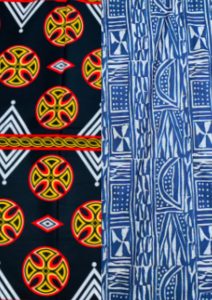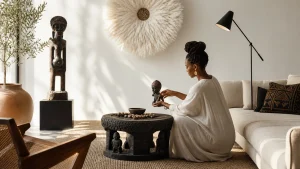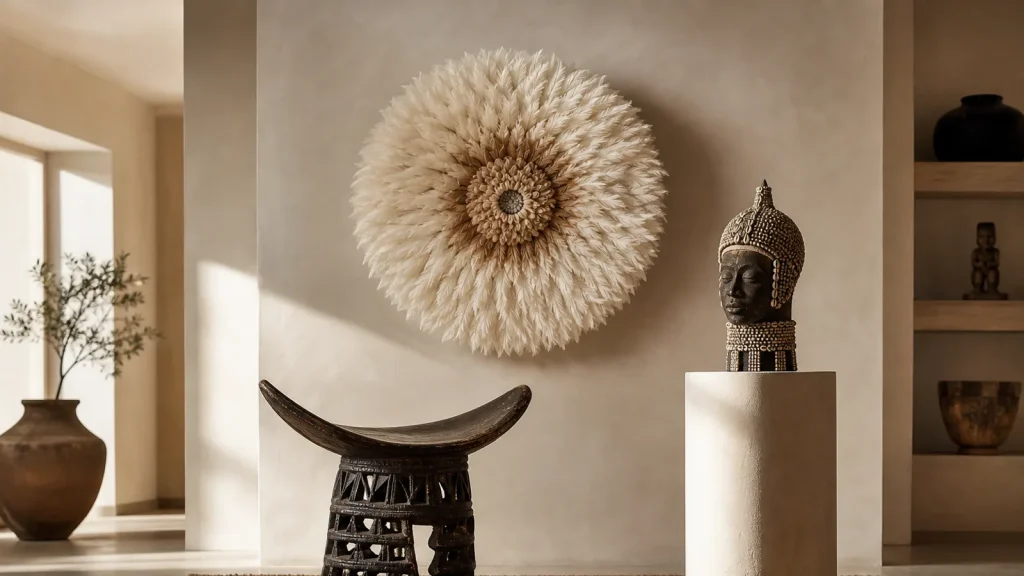
-
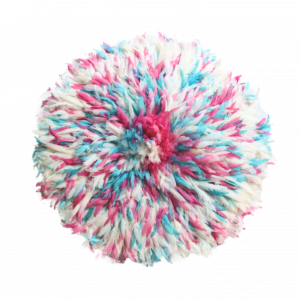 Juju Hat
Juju hat white blue pink
Price range: 127,00 € through 255,00 € This product has multiple variants. The options may be chosen on the product page -
 Shield
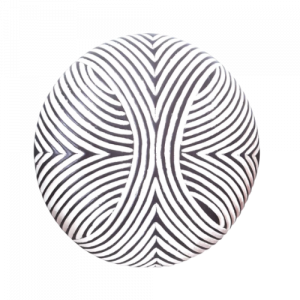
Bamileke shield Lif
Price range: 109,00 € through 237,00 € This product has multiple variants. The options may be chosen on the product page
Roots and continuity
Across the Grassfields of western Cameroon, royal arts developed around the palace as a living language of power, memory and ceremony. Stools signaled authority. Beadwork elevated figures and animals from the everyday to the emblematic. Masks and headdresses affirmed rank and connected rulers to the spiritual realm. These objects were not only aesthetic; they carried relationships, responsibilities and stories.
Today, many of the same motifs appear in contemporary pieces created by skilled makers who inherit techniques through families and workshops. Proportions, colors or uses may shift for modern homes, yet the craft logic remains: careful carving, hand-stitched raffia, feathers prepared over days, and beads applied one by one. When you bring a piece in, you are not importing a trend – you are inviting a lineage to live with you.
From palaces to living rooms
Consider a Bamileke stool. Its openwork column echoes a circle of continuity and leadership. In a palace, it marked presence; at home, it becomes a sculptural side table, still radiating quiet strength. Or the juju hat, a ceremonial headdress of layered feathers symbolically linked to dignity. On a wall it blooms like a soft sun, bringing rhythm, color and a gentle sense of celebration.
Beaded heads and animal forms, once displayed to honor status or ancestors, are now striking focal points in entryways and lounges. Their magnetism comes from contrast: glass bead shimmer over carved wood, geometry next to organic form. That tension is what makes royal arts so compelling in contemporary design.
How to read symbols at a glance
You do not need to be a scholar to appreciate meaning. Start with forms and patterns that often appear in Cameroon royal arts. Their readings can vary by kingdom and context, but these are widely shared interpretations:
- Elephant – power, leadership and protection, frequently linked to royal authority.
- Spider – wisdom and mediation; the weaver who connects and communicates.
- Checkerboard and cross-hatching – balance, vigilance, and the ordered world.
- Triangles and teeth-like edges – strength, alertness and vitality.
- Circles and rings – continuity, unity and the cycle of life.
- Color cues often read as: white for clarity and rites; red for life-force and celebration; blue for peace and reflection.
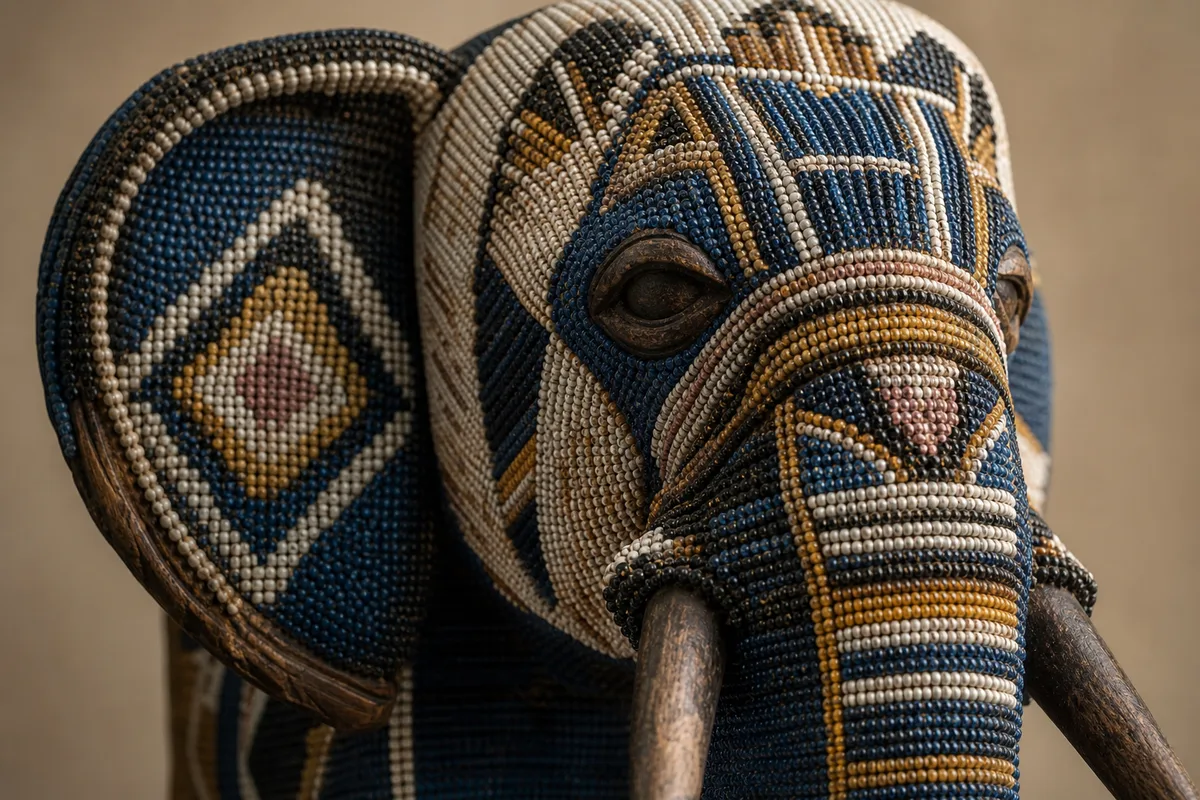
Notice how these signs are not decorative afterthoughts. They are the grammar of the object. When a mask shows a spider or when a stool resolves into a perfect ring, the maker is composing meaning as much as shape.
Materials that matter
Royal arts announce status through material choices and labor. In Cameroon, you will see dense hardwoods for stools and figures; hand-cut glass beads stitched or glued in intricate sequences; raffia or cotton binding; and feathers carefully selected for length and tone. Quality shows in the regularity of bead lines, the crispness of carving, and how elements are joined without excess glue or wobble.
Patina tells a story too. A vintage piece may have softened edges and a warm, handled sheen. A contemporary piece might carry a satin oil finish or a matte seal for durability in busy spaces. Neither is better by default. What matters is honesty: know whether a piece is old, restored, or newly made, and value it for what it truly is.
Contemporary makers and ethics
Today’s makers are artisans, small studios and, at times, palace-affiliated workshops. Some reproduce canonical forms for ceremony or preservation. Others create contemporary iterations sized for apartments, boutique hotels and restaurants. The best work stays close to core techniques while embracing thoughtful adaptation – color harmonies that suit modern palettes, stable mounts, and finishes that respect the material.
Restoration or new creation
Ask clearly: is the piece restored or newly created? Restoration can honor an object’s life – tightening beadwork, replacing a missing feather layer, reinforcing a stool ring. New creations, when well made, keep the tradition breathing and accessible. Practical signs of handcraft include tool marks inside a stool’s lattice, slight variation in bead rows, and the natural irregularity that makes a piece feel alive.
Choosing the right piece for your space
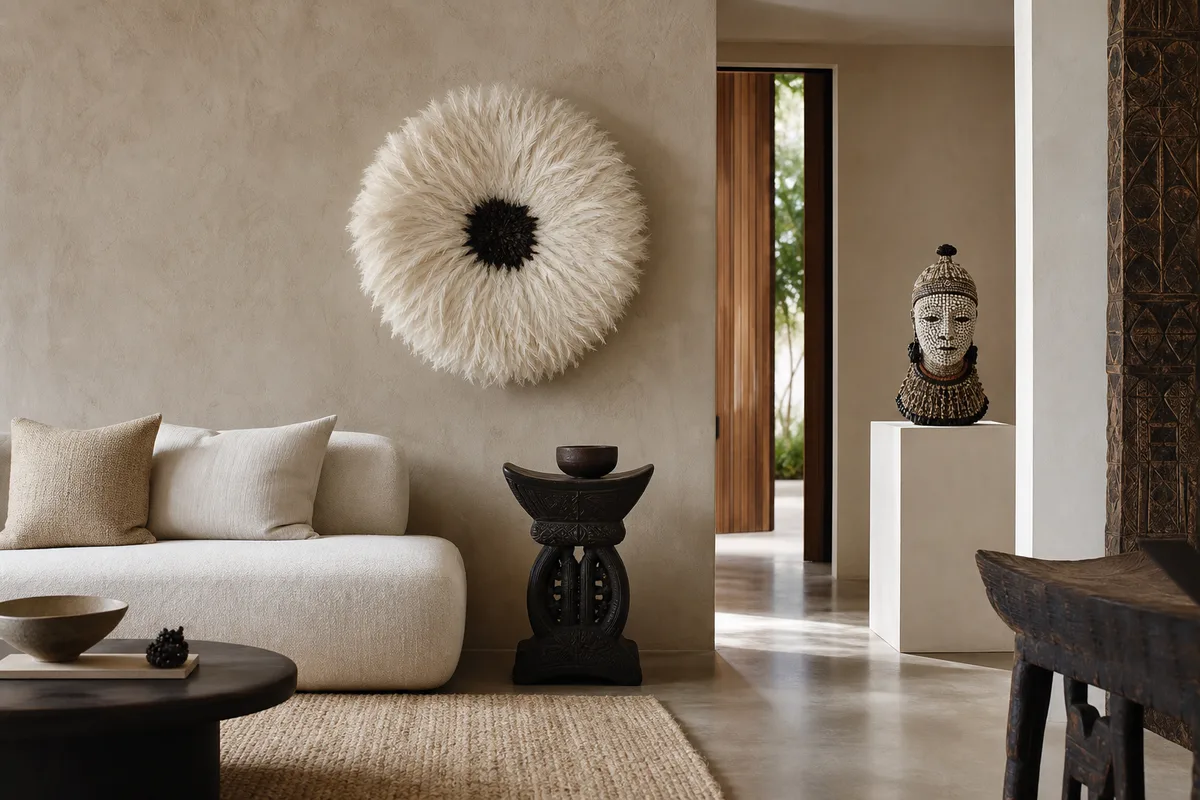
Think of your interior as a stage for dialogue. Royal arts are strong speakers; let them lead. Begin with one anchor piece, then layer textures around it. A dark hardwood Bamileke stool grounds a pale sofa. A white or blush juju hat softens a concrete wall. A beaded head on a plinth becomes a quiet guardian in an entry.
For collectors
Follow your eye, then confirm with your mind. Choose the piece that stops you, then ask about motif, origin area, maker, materials and care. Display with breathing room. Elevate smaller objects on custom stands. If you collect variations of a motif – for example, three juju hats of related tones – hang them as a cluster to create rhythm and depth.
For designers and hotels
Plan for scale, repetition and durability. If you need a series of Bamileke stools for a lounge, request consistent diameter with handmade tolerance. For wall-mounted juju hats, confirm secure backing and humidity considerations. For beaded sculptures in high-traffic areas, favor stable mounts and finishes you can dust easily. Build lead time for sourcing or custom orders, and align on packaging for safe site delivery.
- Check measurements and clearances early, especially for clustered wall pieces.
- Confirm mounts, stands and hardware suited to your wall type or pedestals.
- Discuss finish durability and cleaning routines with the supplier.
- Align on quantity tolerance for handmade series.
- Secure timelines, export paperwork and crating for project logistics.
Caring for longevity
Treat royal arts as you would any fine craft. Keep feathers and raffia away from persistent humidity and direct sun. Dust with a soft brush or microfiber cloth. Avoid aggressive chemicals on beads or wood; a light, pH-neutral approach is safer. For stools used as side tables, add a discreet top glass or coaster to protect from heat and moisture. If you are unsure, ask your supplier for a care note tailored to the exact materials.
Objects carry the memory of the hands that made them. Honor that memory in how you choose, place and care for them.
At Karioska, we curate with this respect in mind: authentic lineage, skilled hand, and dialogue with contemporary life. Whether you are a collector seeking a singular presence, or a design professional building identity across spaces, Cameroon royal arts can do more than decorate. They can ground a room, open a conversation, and quietly light it from within. ✨
-
 Beaded Head
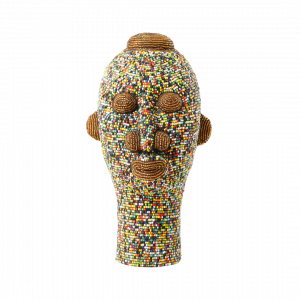
Beaded head multicolor gold
190,00 € This product has multiple variants. The options may be chosen on the product page -
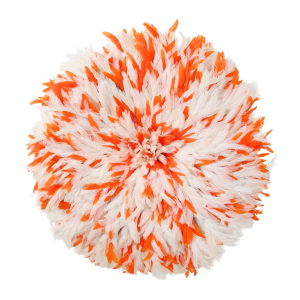 Juju Hat
Juju hat white speckled orange
Price range: 127,00 € through 255,00 € This product has multiple variants. The options may be chosen on the product page -
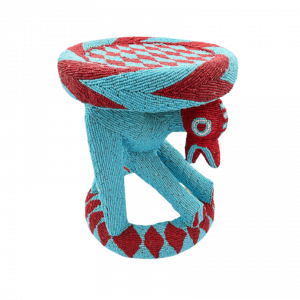 Stool
StoolRoyal Beaded Bamileke Stool Bird Turquoise Red
Price range: 519,00 € through 1039,00 € This product has multiple variants. The options may be chosen on the product page