-
 Juju Hat
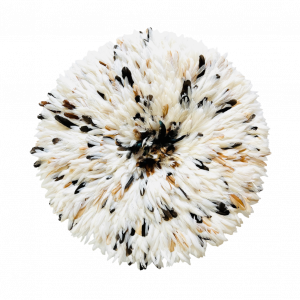
Juju hat white speckled light and dark brown
Price range: 127,00 € through 255,00 € This product has multiple variants. The options may be chosen on the product page -
 Juju Hat
Juju hat light brown
Price range: 127,00 € through 255,00 € This product has multiple variants. The options may be chosen on the product page
Why cohesion matters in African-inspired hospitality decor
Guests remember places that feel anchored in a story. In hospitality, cohesion turns individual objects into an experience guests can follow from lobby to room. With African-inspired hotel decor, that cohesion also carries a responsibility: to present craft with respect, clarity and care, while meeting the realities of traffic, cleaning and safety.
"Cohesion is not sameness; it is a rhythm your guest can follow from arrival to goodnight."
Define a respectful story and a repeatable palette
Choose a cultural thread with respect
Start with a clear narrative that honors origin and maker. Anchor your program in one to two cultural threads rather than many. For example, focus on Bamiléké forms and beading techniques, or on featherwork and raffia from specific regions. Avoid mixing sacred or ceremonial objects in casual contexts; instead, opt for pieces intended for display or contemporary artisan-made interpretations. Always name the region and craft lineage in your documentation.
Build a palette you can repeat
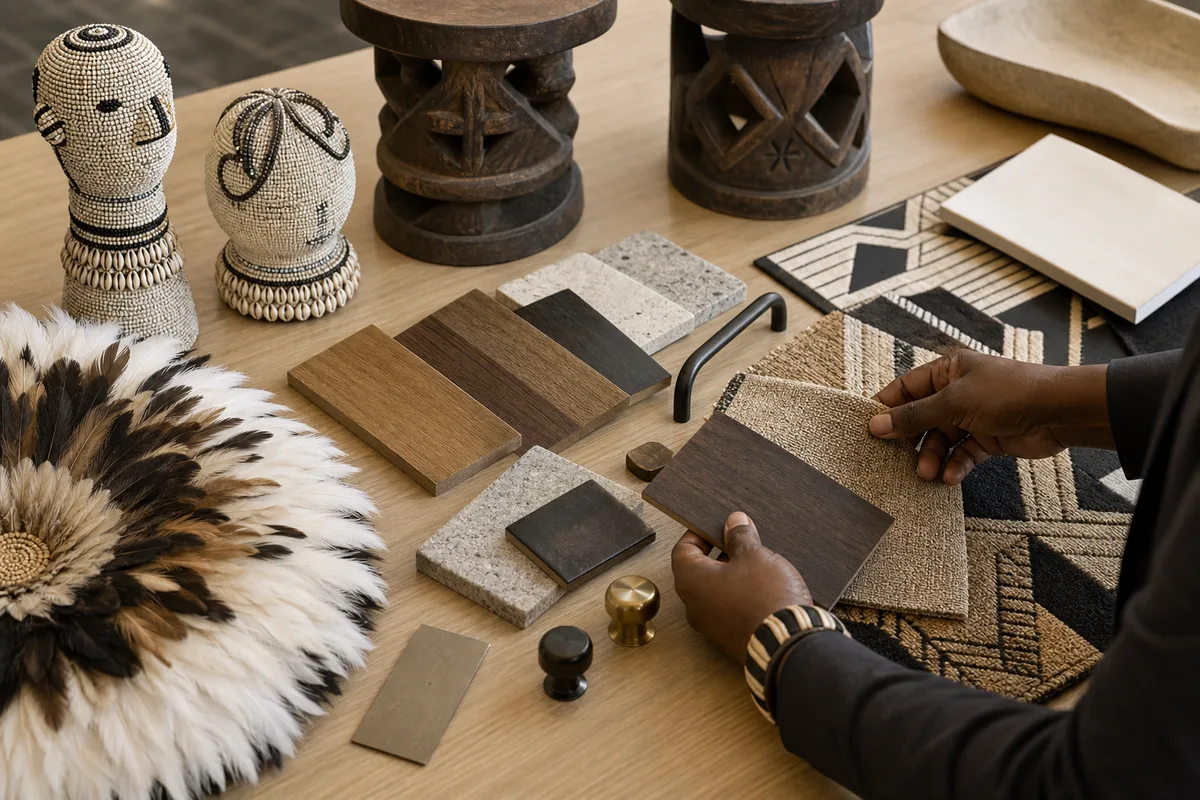
Define a tight vocabulary you can scale: 2 to 3 natural materials, a concise color family, and 3 to 5 recurring forms. Example set: carved hardwood in deep brown, natural raffia, beaded accents; matte black iron for mounts; shapes that repeat such as circular shields, stool profiles and soft domes. This repeatable palette keeps the identity strong even as pieces vary by size or finish.
Plan the collection by zone
Design each zone with a role in the story, then assign object types, sizes and quantities accordingly.
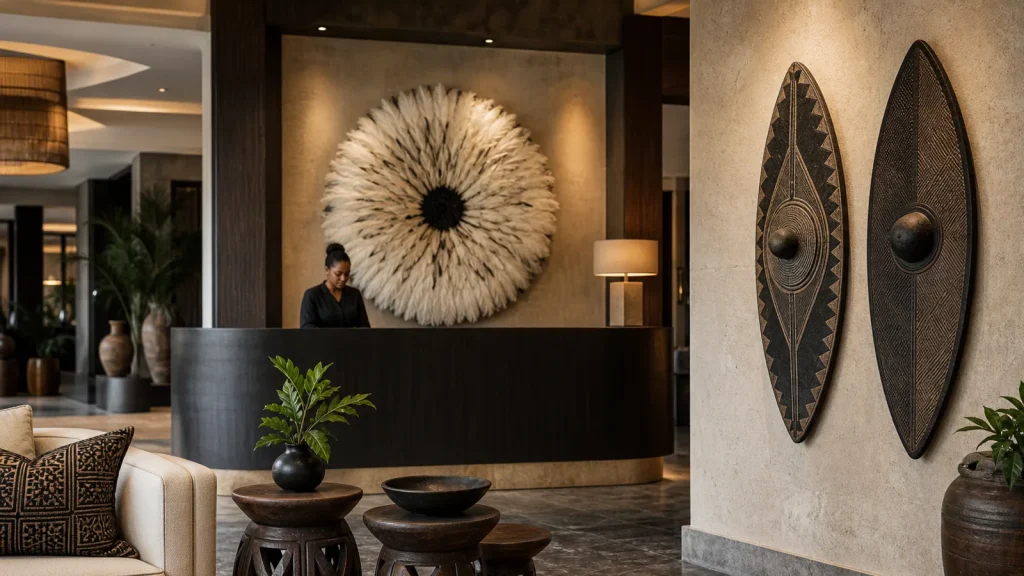
- Arrival and lobby: 1 to 3 signature pieces set the tone at distance. Think an oversized Juju-inspired wall composition above reception, a grouping of Bamiléké stools in varying heights, or a pair of sculptural shields. Ensure strong anchoring and clear sightlines.
- Lounge and bar: mid-scale pieces within conversation distance. Low stools as side tables with sealed tops, beaded heads on shelves, small masks in paired repeats for rhythm.
- Guest rooms and suites: smaller repeats with tactile detail. A framed textile panel, a single beaded object on a console, or a compact shield over the headboard, mounted securely with low projection.
- Corridors and transition spaces: slim-profile wall series. Use shallow reliefs, narrow shields or framed craft studies hung in rhythmic grids to avoid snags and maintain egress.
- Meeting and private dining: 1 feature wall plus movable accents for reconfiguration. Favor modular groupings you can refresh without full redesign.
Durability and maintenance that hold up to service
Authenticity and longevity can live together. Specify finishes and mountings that respect the craft while surviving daily use.
- Materials: choose hardwoods with protective oil or varnish, dense raffia weaves, and high-quality glass or ceramic beads with secure stitching. Avoid loose fibers in high-contact zones.
- Surfaces: add discreet protective tops on stools used as side tables. Opt for wipeable, matte sealers that do not create a plastic look.
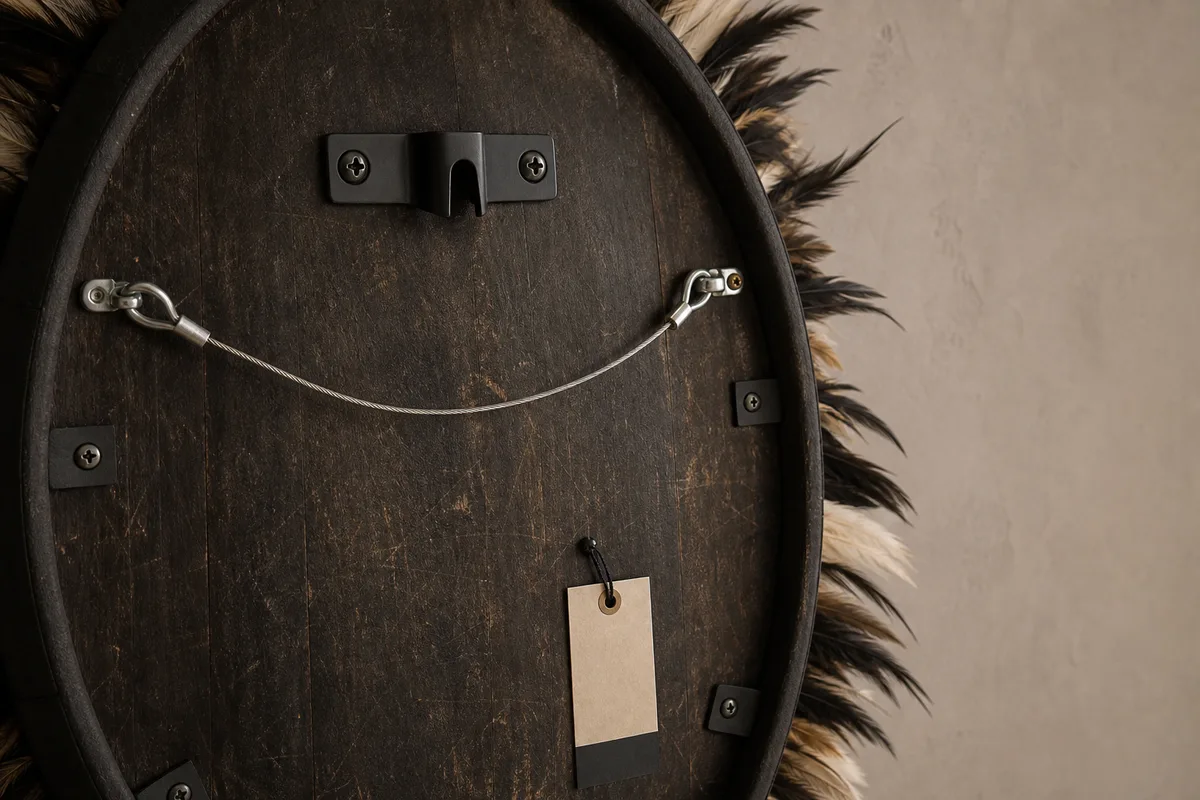
- Hardware: use museum-grade French cleats, anti-lift pins and tamper-resistant screws. For heavy pieces, combine mechanical anchoring with wall blocking planned early with contractors.
- Cleaning: set a simple schedule. Dry dust weekly, spot clean with pH-neutral products, and train staff to avoid saturated wiping on natural fibers. Document what not to use.
Safety and compliance basics
Integrate safety from the start, and verify with your local code authority or fire consultant.
- Flame behavior: for textiles and featherwork near circulation or lighting, use inherently low-flammability substrates or certified fire-retardant treatments where required.
- Clearances: maintain corridor widths and head clearances. Choose shallow profiles in tight spaces.
- Anchoring and weight: document weights, fixings and wall types. Use secondary safety cables for overhead displays.
- Edges and projection: soften or round corners on low pieces and keep projections minimal near seating.
- Finishes and air: prefer low-VOC sealers to protect indoor air quality.
- Emergency lighting and signage: avoid obstructing fixtures or exit signs with decor.
Budgets, volumes and repeatability
Plan early so your program scales without losing soul.
- Cost drivers: size, rarity, surface work (like dense beading) and complex mounting raise budgets. Balance them with series pieces that share forms and finishes.
- Volumes: define a base kit per room type and per corridor bay. Pre-approve 2 or 3 variants to allow hand-made differences within a constant look.
- Lead times: build a calendar that respects craft pace. Batch orders by zone and add a buffer for drying, finishing and export logistics.
- Reorders and spares: hold a small reserve for breakage or future refresh. Document finishes so reorders match closely without forcing uniformity.
- Events and seasonality: for short-term activations, consider rentals or a rotate-in capsule to avoid permanent spend.
Sourcing and logistics with a dedicated partner
A specialist partner keeps authenticity, quality and delivery aligned. Karioska curates and sources artisan-made pieces with clear provenance, focusing on Cameroon heritage and broader African craft. For professionals, we offer small-series production, wholesale ordering, rental for events, and tailored sourcing for specific briefs. We coordinate dimensions, finishes and mounts, and provide care guidance so pieces settle seamlessly into hotel and restaurant operations.
Installation and storytelling on site
Installation day is where craft meets place. Pre-label pieces by zone, pre-install cleats, and walk the route with your contractor before uncrating. After mounting, add discreet labels noting region and craft, and prepare a one-page brief for your team so they can share the story with guests. Consistent, respectful storytelling turns beautiful objects into a signature your guests remember and talk about.
-
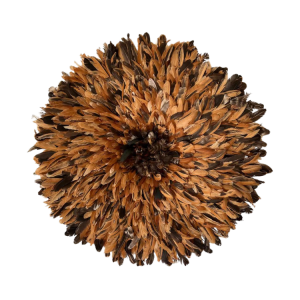 Juju Hat
Juju hat brown speckled
Price range: 127,00 € through 255,00 € This product has multiple variants. The options may be chosen on the product page -
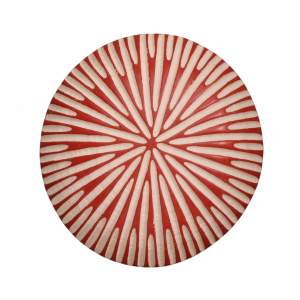 Shield
Bamileke Shield Red Tonga
Price range: 109,00 € through 237,00 € This product has multiple variants. The options may be chosen on the product page -
 Juju Hat
Juju hat white speckled dark brown
Price range: 127,00 € through 255,00 € This product has multiple variants. The options may be chosen on the product page