
-
 Beaded Head
Beaded Head Black & White Matobo
Price range: 270,00 € through 423,00 € This product has multiple variants. The options may be chosen on the product page -
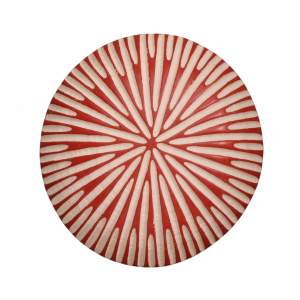 Shield
Bamileke Shield Red Tonga
Price range: 109,00 € through 237,00 € This product has multiple variants. The options may be chosen on the product page
Your project is approved, the mood is clear, and the install date is locked. Now you need authentic African pieces that elevate the story without risking the schedule. This guide shares the way design teams work with Karioska to specify confidently under deadline, while respecting the craft, culture and natural variability of artisan-made objects.
Why authenticity and lead time planning go together
True craft follows the pace of hands and materials. A Bamiléké stool carved from a single block, a Juju Hat assembled feather by feather, a beaded sculpture with hand-set patterns – every step takes time and produces subtle variation. Planning for that reality is how you deliver a space that feels alive, not mass-produced.
Authenticity is a feature, not a defect. Plan for it and your design gains depth instead of risk.
What to specify up front
The fastest projects start with a crisp brief. Share the narrative, the must-haves and the tolerances. Here is what to lock early:
- Project context and function: lobby focal wall, guestroom pair, entry console, retail vignette.
- Program and quantities: single hero piece, series of 6, set of 24 for guestrooms.
- Critical dimensions and clearances: maximum depth, minimum passage width, height ranges.
- Materials and finishes: woods you like, feather hues, beadwork palettes, metal accents.
- Budget bands: per-piece target, overall cap, flexibility for a hero piece.
- Compliance and safety: wall fixing requirements, kid-friendly edges, hospitality regulations.
- Access and logistics: elevator size, stairs, load-in timing, site protection needs.
Managing variability without losing design intent
Artisan pieces are siblings, not clones. Designing for that truth keeps the look curated and cohesive. Three tools help you do it.
Approved alternates that protect the concept
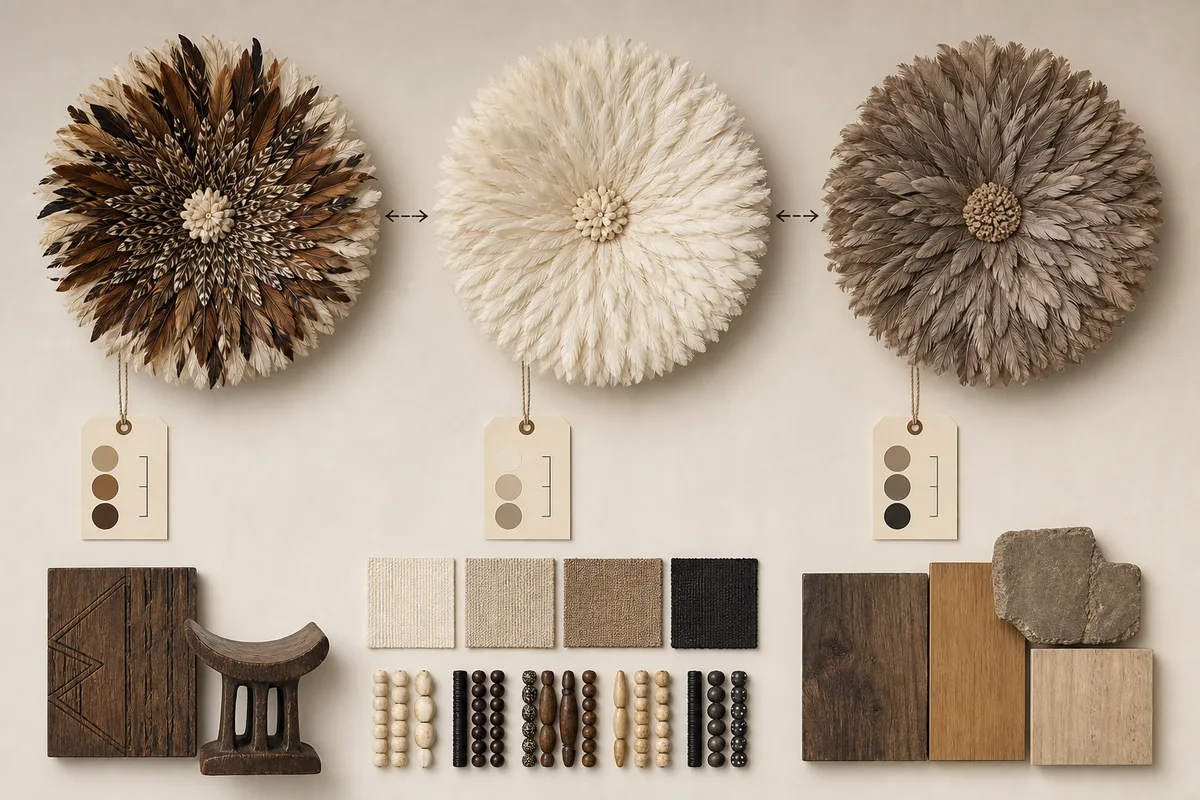
Define a first choice and one or two approved alternates per item. Example: Primary – natural feather Juju Hat in 80 cm; Alternate A – off-white; Alternate B – warm taupe. Do the same for carved stools, masks and bead colors. Your spec stays agile without design-by-surprise.
Finish tolerance ranges that are realistic
Specify acceptable ranges instead of absolutes. For wood: allow tone variation from light honey to medium walnut, matte to satin. For feathers: note that density and slight hue shifts are inherent. For beadwork: approve a palette and pattern logic rather than a pixel-perfect map.
Visual benchmarks that travel with the order
Provide 2 to 3 reference images per item that capture tone, texture and overall presence. Karioska attaches these to the work order so artisans aim for the same north star.
Lead time and ordering strategy
Lead times depend on craft complexity, quantity and shipping mode. Plan the order in layers to protect the install date.
Ready-to-ship vs made-to-order
Ask what is ready to ship from France and what must be produced or sourced. Ship ready items first to anchor your install, then phase in made-to-order pieces as they complete.
Phased deliveries and reserves
For larger programs, schedule partials. Keep a small reserve quantity approved as alternates so you can replace a misfit fast without reopening the design.
Holds and substitutions
If you see a perfect one-of-a-kind, place a time-limited hold while approvals finalize. Pre-approve a substitution matrix by item type so last-minute changes follow your rules, not panic.
Pack lists, install notes and care sheets
Clarity at unboxing is what saves hours on site. Label everything, include hanging hardware where relevant, and attach care at the piece level.
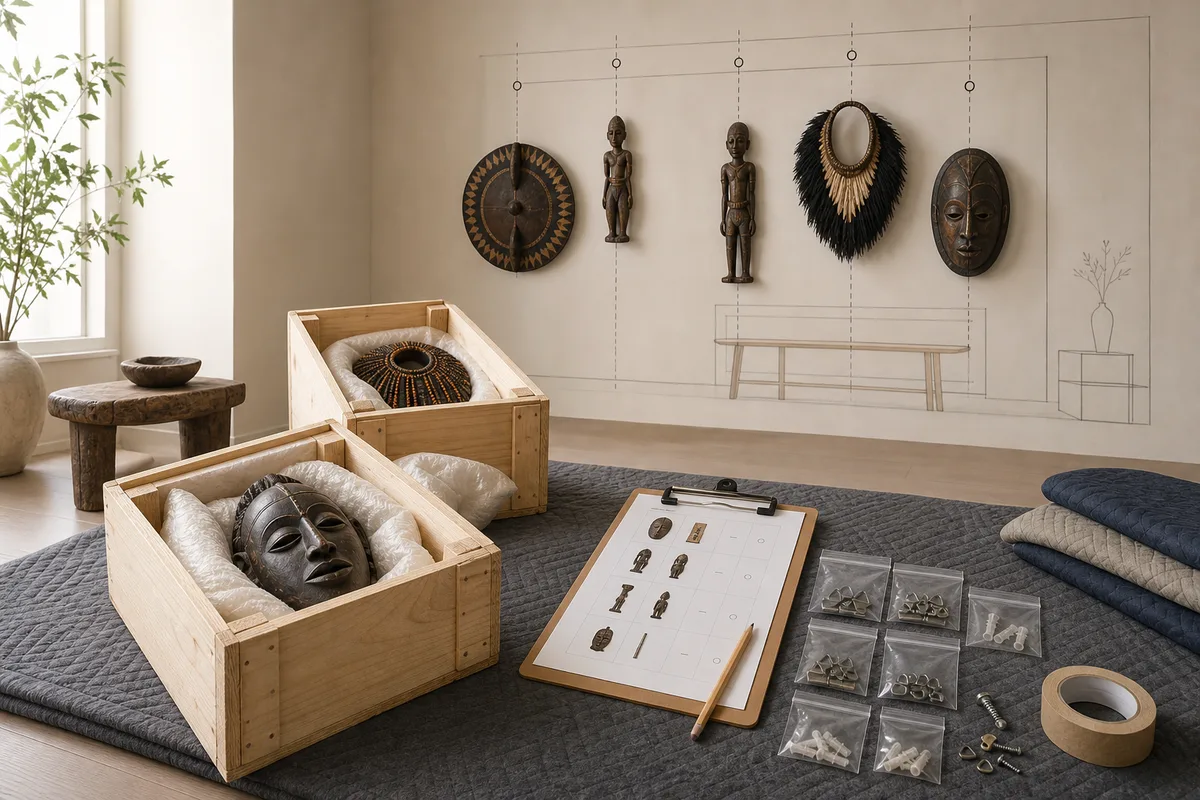
Sample pack list you can copy
- Project, site and room: Hotel Luma, Level 2 Corridor, Bay 03.
- Item ID and thumbnail: JH-80-NAT-02, 80 cm natural Juju Hat.
- Finish and notes: natural feather, matte center, approved within Range A.
- Hardware included: 1 wall hook rated 10 kg, 2 anchors, 2 screws.
- Protection: acid-free tissue, dust bag, outer carton with corner guards.
- Weight and dimensions: 1.2 kg, 82 x 82 x 14 cm.
- Installer note: Do not compress feathers; open and fluff before placement.
Install notes for common pieces
- Juju Hats: hang on a centered hook; allow 10 cm clearance to adjacent pieces; fluff by hand.
- Bamiléké stools: place felt pads; avoid dragging; verify load capacity if used as side table.
- Beaded heads and sculptures: place on stable surface; avoid direct sunlight; use museum putty where needed.
- Masks and shields: use two-point mounts for alignment; confirm wall type and anchors.
Care basics for longevity
- Dust gently with a soft brush or microfiber cloth.
- Keep away from persistent direct sunlight to prevent fading.
- Maintain stable humidity; avoid damp areas for feathered pieces.
- Spot clean wood with a barely damp cloth, then dry immediately.
- Do not use chemical cleaners or aerosols on beadwork or feathers.
How to brief Karioska for fast, accurate sourcing
A precise brief reduces back-and-forth and lets us move straight to curation, availability and pricing.
A concise brief template
- Project name, client type and narrative.
- Use case and quantities per area.
- Target dimensions or footprint limits.
- Preferred materials and finish ranges.
- Primary choice plus 1 to 2 approved alternates per item.
- Budget band per piece and overall cap.
- Timeline with install date, blackout dates and ship-to address.
- Compliance or safety notes and wall types.
- Site access constraints and delivery windows.
What Karioska returns to you
- Curated options with images, dimensions and provenance notes.
- Availability matrix: ready-to-ship vs made-to-order with realistic lead times.
- Price proposals with approved alternates pre-costed.
- Pack list preview and installation recommendations.
- Care sheets tailored to each material category.
- Shipping plan with phasing if required.
Working with hospitality and multi-unit projects
Consistency across multiples
When specifying series for guestrooms or corridors, agree a visual range and have us assemble sets that harmonize within it. We photograph groupings before shipment so you sign off on the whole look, not just single pieces.
Rental and staging options
For events, short-term activations or show units, ask about rentals and temporary installs. It is a smart way to test scale and palette before committing to purchase across many units.
Final checklist you can copy
- Brief signed off with alternates and finish ranges.
- Lead time plan: ready now, made-to-order, holds and reserves.
- Approved visuals attached to the purchase order.
- Pack list and labels prepared per room or zone.
- Install notes and hardware included by piece.
- Care sheets printed and stored on site.
- One point of contact for delivery and install day.
With a clear brief, realistic tolerances and the right documentation, authentic African pieces can land on time and look exactly as intended – alive, storied and integral to your design.
-
 Juju Hat
Juju hat multicolor rainbow
Price range: 127,00 € through 255,00 € This product has multiple variants. The options may be chosen on the product page -
 Juju Hat
Juju hat burgundy
Price range: 127,00 € through 255,00 € This product has multiple variants. The options may be chosen on the product page -
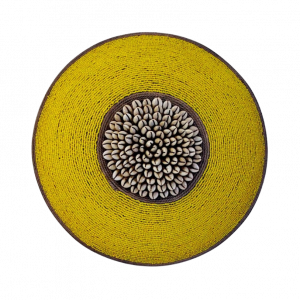 Shield
Bamileke Shield beads cowries yellow
Price range: 109,00 € through 139,00 € This product has multiple variants. The options may be chosen on the product page