-
 Juju Hat
Juju hat natural brown with white ring
Price range: 127,00 € through 255,00 € This product has multiple variants. The options may be chosen on the product page -
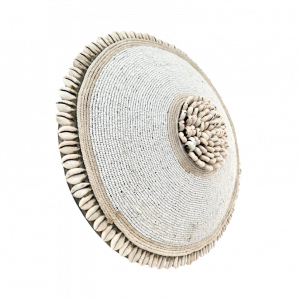 Shield
Bamileke Shield beads cowries white cream
Price range: 109,00 € through 139,00 € This product has multiple variants. The options may be chosen on the product page
Why patina and clean lines belong together
A room changes the moment a hand carved mask or a Bamileke stool enters. Patinated objects hold rhythm, touch and time. Modern furniture offers clarity and calm. Together they create tension that feels both rooted and fresh. This is the heart of vintage African decor in contemporary spaces: let authenticity carry the story while minimal lines give it room to breathe.
At Karioska, we curate pieces that honor African craftsmanship so they can live confidently beside concrete, steel and glass. The goal is not to theme a room, but to compose it. Start with proportion, then add contrast and light.
Proportion first: simple rules that keep harmony
Scale your focal pieces
– Above a sofa, aim for wall art or a juju hat that is about 60 to 75 percent of the sofa width. It reads strong without swallowing the wall.
– A sculpture on a pedestal feels most natural when the top of the piece sits near eye level, roughly 140 to 160 cm from the floor.
– If you use a Bamileke stool as a side table, keep the top within about 5 cm of the sofa arm height so it functions well and looks intentional.
Layer smaller objects with intention
Group in odd numbers for rhythm. Combine one vertical piece, one lower piece and one with a distinct texture. Keep height steps gentle so the eye flows, about 10 to 15 cm between pieces. Use a tray to define the footprint on modern casework without adding visual clutter.
Wall pieces and juju hats
Center wall objects near 145 cm from the floor to sit close to eye level. When hanging above furniture, leave a 10 to 20 cm gap so the piece relates to the item below. If you are pairing two shields or masks, leave breathing space between them equal to about one mask width.
Pedestals and plinths
Choose a base that is stable and visually quiet. A plinth width around one half to two thirds of the object’s widest point usually feels balanced. Leave at least 15 cm of air around the silhouette so the carving reads clearly against the wall.
Contrast materials with intent
Stone and carved wood
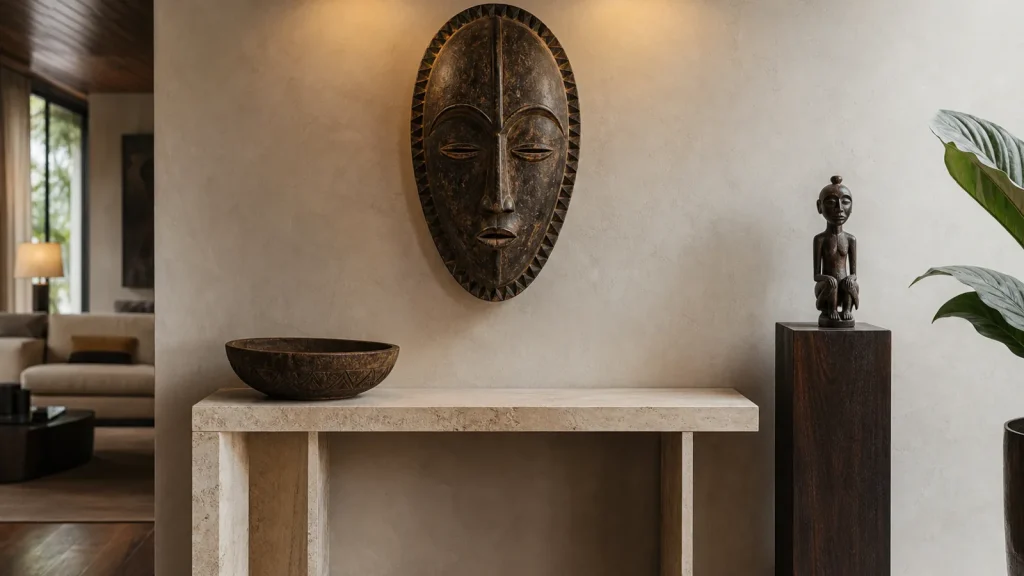
Rough stone or concrete grounds the warmth of hand carved wood. A limestone console lets a dark patinated mask pop, while a travertine coffee table calms the lively geometry of a beaded head.
Glass and beadwork
Clear glass desks and shelves visually disappear, giving beaded sculptures center stage. The transparency highlights color and pattern without heaviness.
Metal and raffia or grass
Satin brass or blackened steel frames bring precision to raffia, grass and rattan textures. Use slim metal legs or picture frames to echo the clean architecture around organic fibers.
Light that honors craftsmanship
Light shapes how we read texture. Blend three types of lighting:
- Ambient light for overall calm. Warm white around 2700 to 3000K flatters wood and earth tones.
- Accent light to model relief. Aim spotlights at roughly 30 degrees to avoid glare and harsh shadows on masks or shields.
- Task light where you work or read so decorative pieces are not forced to carry brightness.
Use dimmers to shift mood from day to night. Give beadwork and natural fibers gentle, indirect daylight and avoid prolonged direct sun or high heat sources. LED picture lights or track spots with good diffusion keep surfaces crisp without harm.
Room by room ideas
Living room vignette
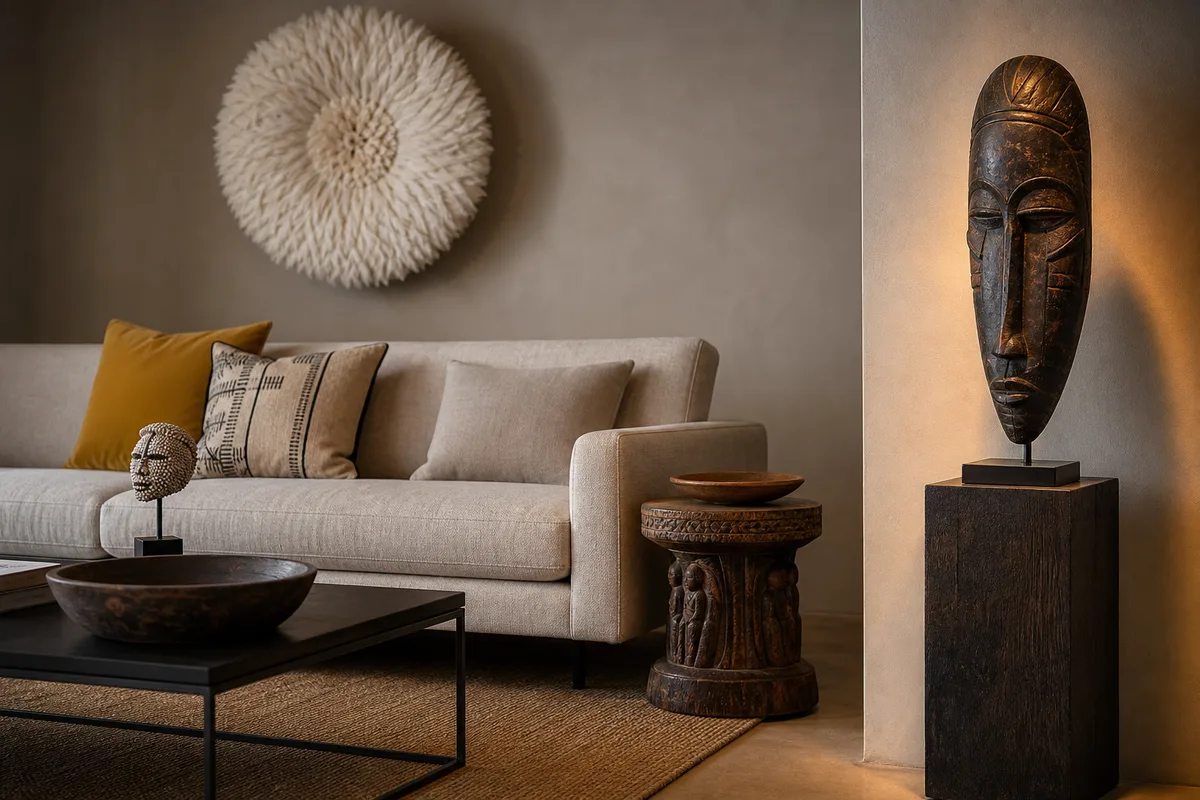
Let the sofa and rug set the calm. Add one strong vintage African object as a focal point, then layer a few quiet supports.
- Hang a juju hat centered above the sofa at about two thirds of the sofa width.
- Use a Bamileke stool as a side table with a linen shade lamp. Keep cord lines neat so the object remains the hero.
- On the coffee table, place a low carved bowl on a tray to gather remotes and add hand worked texture.
Entry that sets a tone
Entries benefit from clarity. Choose one wall piece that greets, one surface that serves, and one light that flatters.
- A slim console at 75 to 85 cm high keeps circulation fluid.
- Hang a shield or mask 10 to 20 cm above the console. A mirror can pair beside it if you keep the mirror about two thirds the console width.
- Catch keys in a hand carved shallow bowl so the daily gesture meets craft.
Office that stays focused
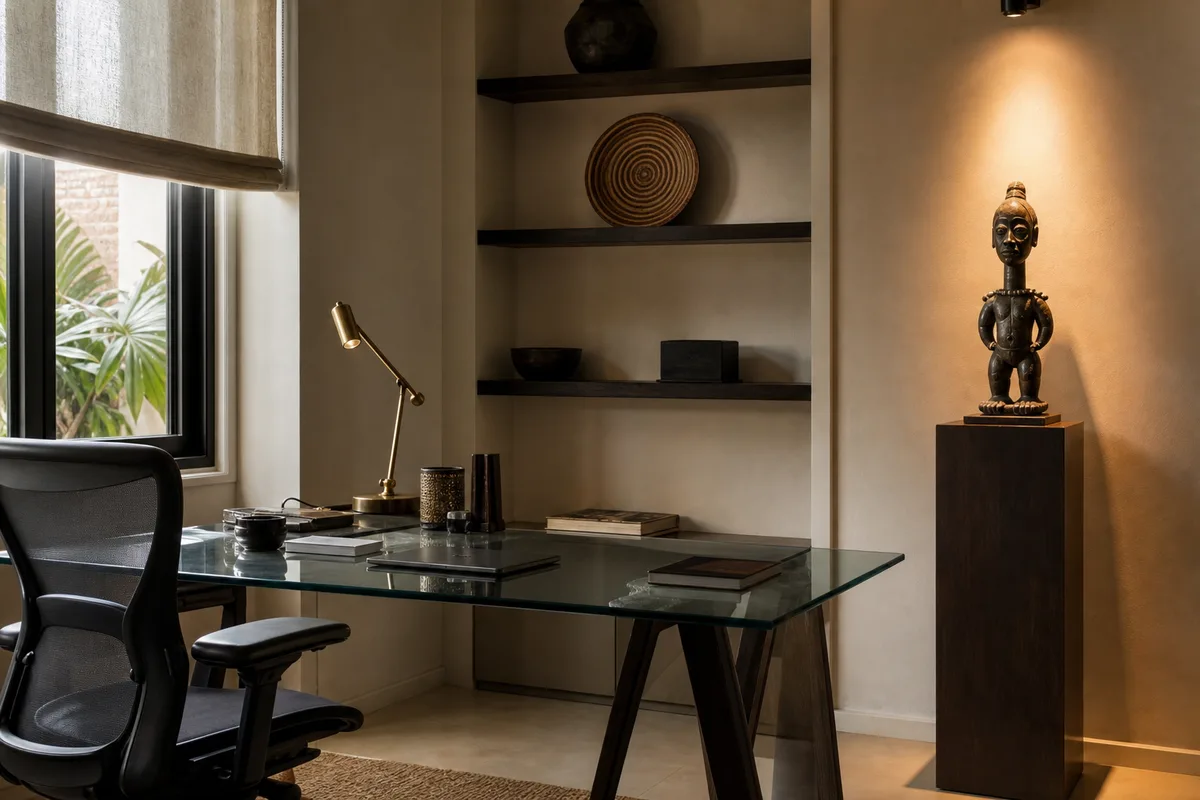
Keep your desk surface clean and let one crafted piece hold presence in your peripheral vision rather than in your way.
- A glass or matte desk with closed storage maintains focus.
- Place a small bronze or beaded figure on a dark plinth so the top sits near eye level when seated.
- Add a directional spotlight with a soft beam to bring out texture without glare on screens.
For professionals: specify with confidence
For interior designers and hospitality teams, consistency is everything. Align the story early, then let sourcing refine it.
- Define the narrative in one sentence, for example: earthy geometry against sleek lines.
- Lock key dimensions first: wall spans, console heights, pedestal sizes and lighting positions.
- Build a material palette that repeats across rooms so patinated objects feel curated, not scattered.
- If you need multiples or specific sizes, brief the requirements early so we can source or commission responsibly.
- Plan installation details from packing to protection pads to ensure safe handling and long term stability.
Care that preserves character
- Dust with a soft brush or microfiber cloth. Avoid sprays and heavy polishes.
- Keep objects away from direct heat and prolonged sun. Rotate positions if a spot gets strong daylight.
- Add felt pads under stools and sculptures to protect floors and plinths.
- When moving beadwork or fragile carvings, support from the base, not protruding details.
Start small, build a story
Choose one authentic piece you love, place it with good proportion, add the right light, then let the room answer back. Over time you can layer a second or third object until your modern interior holds a clear, personal conversation with African heritage. If you need guidance or a specific piece, Karioska can help you source with respect for origin, craft and context.
-
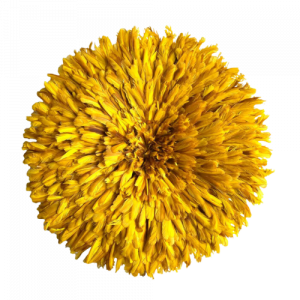 Juju Hat
Juju hat yellow
Price range: 127,00 € through 255,00 € This product has multiple variants. The options may be chosen on the product page -
 Juju Hat
Juju hat pink cotton candy
Price range: 127,00 € through 255,00 € This product has multiple variants. The options may be chosen on the product page -
 Juju Hat
Juju hat multicolor rainbow
Price range: 127,00 € through 255,00 € This product has multiple variants. The options may be chosen on the product page