-
 Juju Hat
Juju hat indigo
Price range: 127,00 € through 255,00 € This product has multiple variants. The options may be chosen on the product page -
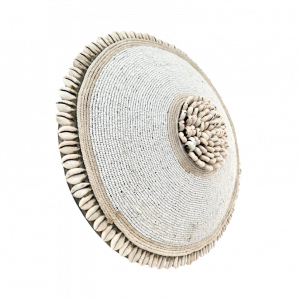 Shield
Bamileke Shield beads cowries white cream
Price range: 109,00 € through 139,00 € This product has multiple variants. The options may be chosen on the product page
A modern interior can be quiet without feeling empty, and soulful without feeling busy. When authentic African artisan pieces enter a contemporary space, the result can be a room that breathes with story and intention. At Karioska, we curate objects that carry heritage from Cameroon and beyond so they can live beautifully in today’s homes, hotels and concept spaces.
Why African heritage belongs in contemporary rooms
Contemporary design values clarity, proportion and honest materials. African craft is built on the same truths: hand-carved forms, woven fibers, natural pigments and time-earned patina. The meeting point is not a theme; it is a dialogue. Your role as a collector, designer or hotelier is to conduct that dialogue with restraint and respect, allowing each piece to speak while the room stays calm and functional.
Core principles for balance and calm
Balance
Think of balance as visual equilibrium. If a large Juju Hat crowns the sofa wall, counterweight it with a grounded element such as a Bamileke stool or a dark-toned console. Create triangular relationships between pieces at different heights so the eye moves smoothly across the room instead of pooling in one corner.
- One hero per zone. Let one culturally significant piece lead each area, with quieter companions around it.
- Vary weights. Pair airy items (woven baskets, open stools) with dense ones (solid wood, stone).
- Echo, do not copy. Repeat a texture or motif once elsewhere to knit the story together.
Scale
Right-sized pieces make minimal rooms feel generous. A small mask lost on a vast wall looks apologetic; a medium or grouped arrangement reads confidently. In open plans, go larger and fewer: an overscaled shield, a substantial stool as a side table, a bold woven wall piece that holds distance.
Negative space
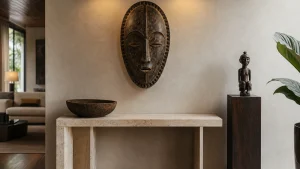
Give heritage pieces breathing room. Leave clean air around carvings and beadwork so shadows show the workmanship. On walls, center and align with architectural elements. On consoles, style in odd numbers and stop before the surface feels filled. Silence between objects is what lets them sing.
Texture layering
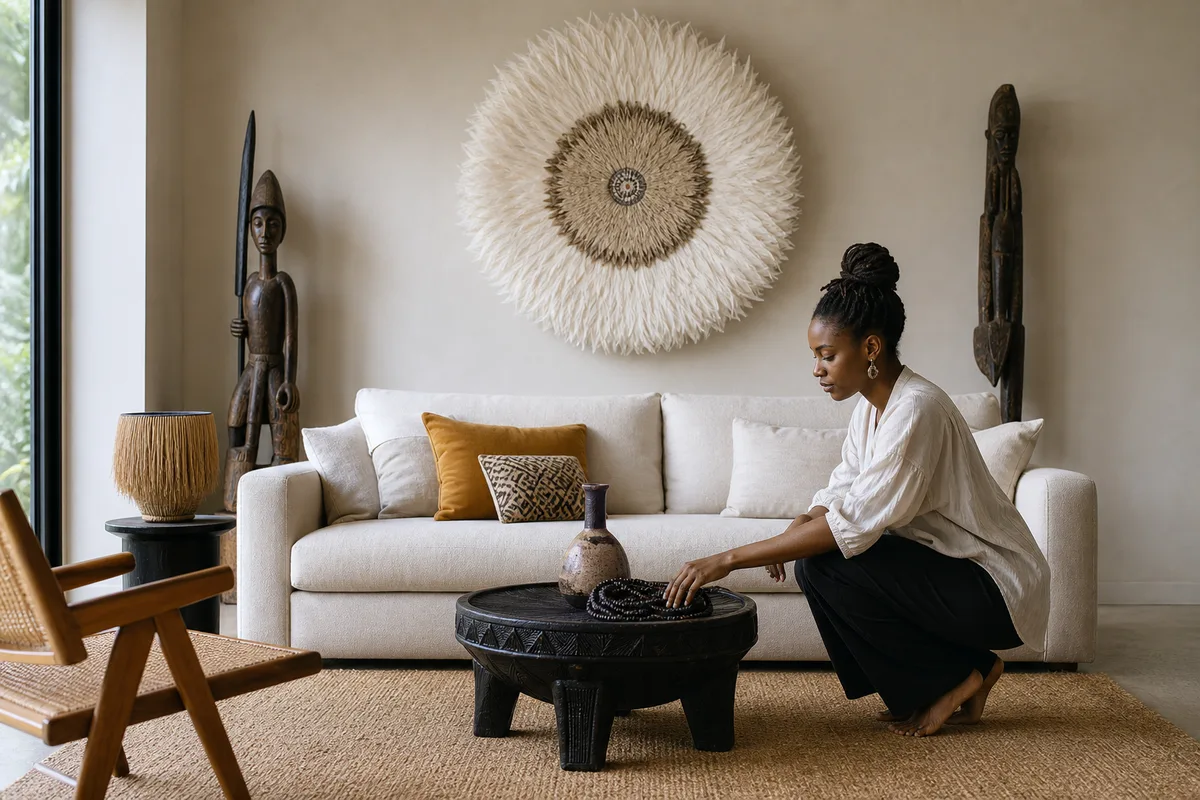
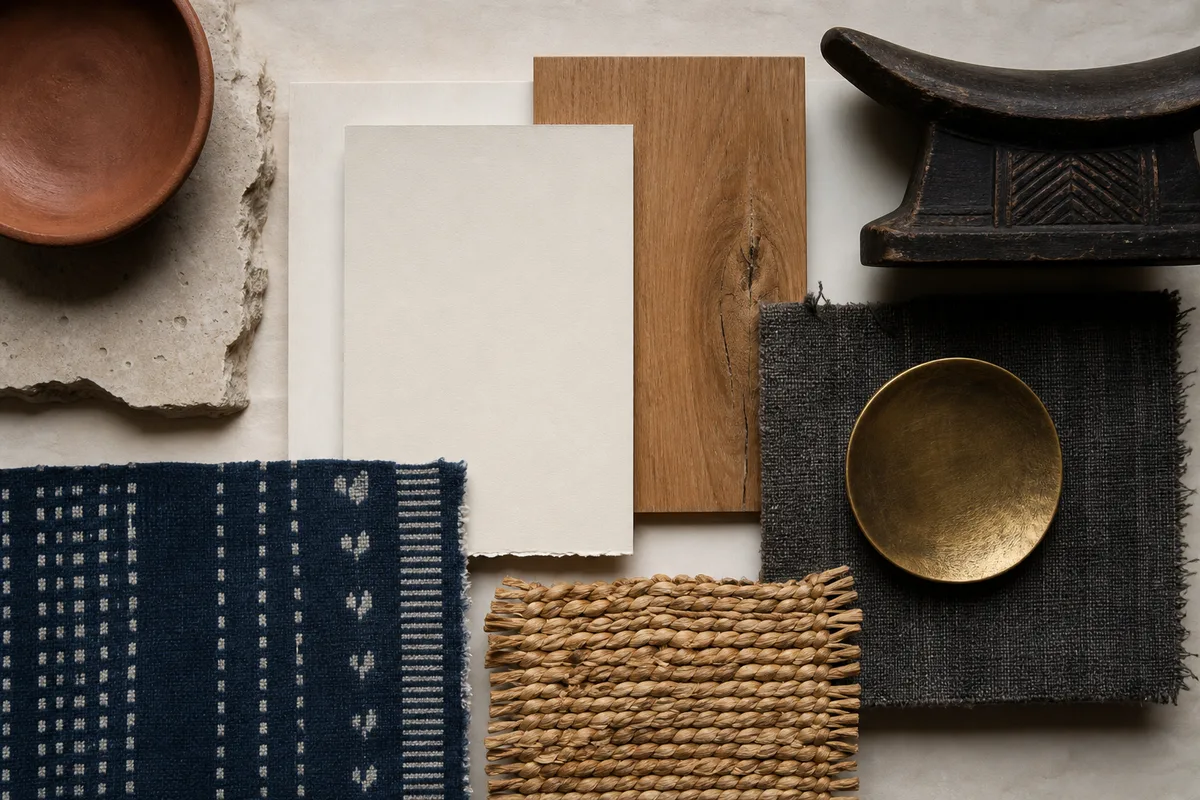
Texture is your most powerful tool to blend eras and cultures. Layer a limited set of honest materials at distinct scales so the room reads rich, not restless.
- Coarse: raffia, rattan, sisal for warmth underfoot or on walls.
- Medium: carved hardwoods with visible grain for depth.
- Fine: beadwork, bronze or brass accents to catch light.
- Soft: indigo-dyed textiles or mudcloth throws for comfort and pattern.
Color strategy that respects materiality
Start with a calm base so form and texture lead. Off-whites, clay, sand, taupe, charcoal and deep brown honor natural materials. Add accents pulled from craft traditions, but keep them intentional and limited.
- Neutrals as canvas. Walls in warm white or pale clay, floors in natural wood or stone.
- Earth before brights. Let wood, fiber and patina set the tone; then introduce one saturated hue.
- Confident accents. Indigo, terracotta, forest green or ochre used in 1 to 2 elements per room.
- Metal bridges. Brass or blackened steel hardware links contemporary lines to artisanal warmth.
Room-by-room guidance
Living room
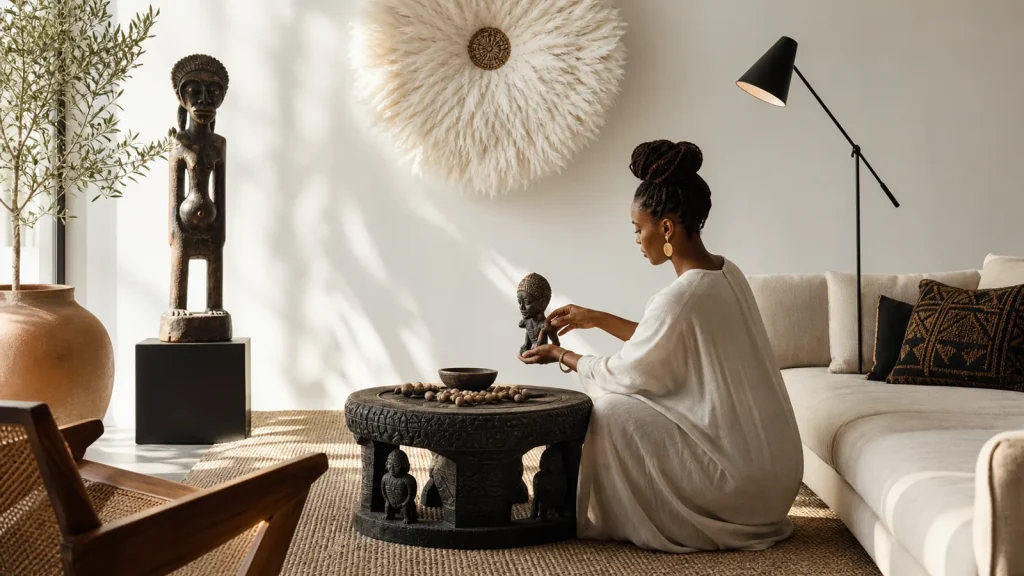
Anchor the seating area with a Bamileke stool as a coffee table or side table. Above the sofa, a Juju Hat becomes a tactile focal point. Echo its softness with a single indigo pillow, then ground the set-up with a dark wood console holding a beaded sculpture. Keep shelves sparse so key pieces read as art, not accessories.
Dining area
Choose a simple table with honest grain. Let a pair of shields or a linear arrangement of small masks define the wall at eye level. On the table, one sculptural centerpiece in wood or beads is enough. Natural linen and hand-thrown ceramics add tactility without clutter. Dim-to-warm lighting flatters wood tones and beadwork.
Bedroom
Quiet is the priority. Keep the palette soft and let a woven wall piece or a small Juju Hat hover above the headboard. Bedside, use carved stools as tables for a gentle cultural note. Layer a single patterned throw at the foot of the bed and keep other surfaces serene so the room restores rather than stimulates.
Entry and hospitality spaces
First impressions set identity. In entries and lobbies, a strong, single artwork or a unified series creates clarity from the door. Consider scale for long sightlines: oversize wall pieces or tall sculptures that hold space without crowding circulation. For restaurants and boutiques, repeat one material story across zones so guests experience cohesion from arrival to exit.
For professionals: cohesion, logistics and sourcing
Designers and hoteliers often need consistency, lead time and clear provenance. Define a narrative early, then source within that frame so the collection feels edited rather than eclectic.
- Cohesion rule. Limit to 2 to 3 primary materials and 1 to 2 repeating motifs across a project.
- Scale planning. Mark wall centers and furniture footprints on plans to right-size pieces before procurement.
- Durability. For high-traffic zones, prioritize dense hardwoods and tightly beaded surfaces; reserve fragile textiles for protected moments.
- Mounting and safety. Confirm wall load, appropriate fixings and, for hospitality, flame behavior of textiles.
- Care plans. Document cleaning and handling so patina is preserved and finishes stay consistent.
Karioska supports B2B projects with curated selections, sourcing and coherent series, always centered on authenticity and craft. Share dimensions, mood and deadlines early to align artistry with logistics.
Mistakes to avoid
- Overfilling with small objects that create visual noise.
- Mixing too many woods or motifs so nothing stands out.
- Hanging art too high or off-center relative to furniture.
- Using bright colors everywhere instead of one confident accent.
- Ignoring natural patina by over-restoring or over-cleaning.
- Treating significant cultural pieces as casual props rather than art.
Start with intention, let the story lead
Every artisan piece carries origin, hand and meaning. When you place it with space to breathe, at a scale that suits the architecture, on a calm color base with measured texture, the room gains quiet power. Begin with one object you love, build a simple palette around it, and let the story grow with care. That is how African heritage interiors feel timeless inside contemporary life.
-
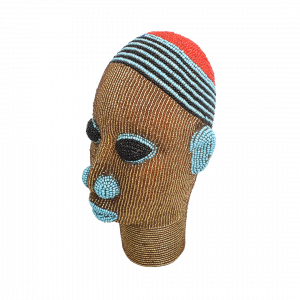 Beaded Head
Beaded head golden blue
Price range: 127,00 € through 423,00 € This product has multiple variants. The options may be chosen on the product page -
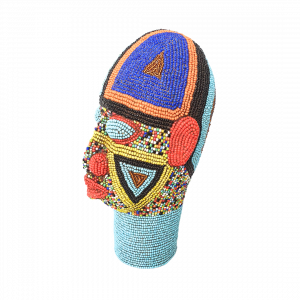 Beaded Head
Beaded head Basquiat colors style
Price range: 190,00 € through 423,00 € This product has multiple variants. The options may be chosen on the product page -
 Juju Hat
Juju hat white speckled blue
Price range: 127,00 € through 255,00 € This product has multiple variants. The options may be chosen on the product page