Author name: Kari

African craft

The Bamileke Ndop and the Toghu fabric, two symbols of Cameroon’s living heritage

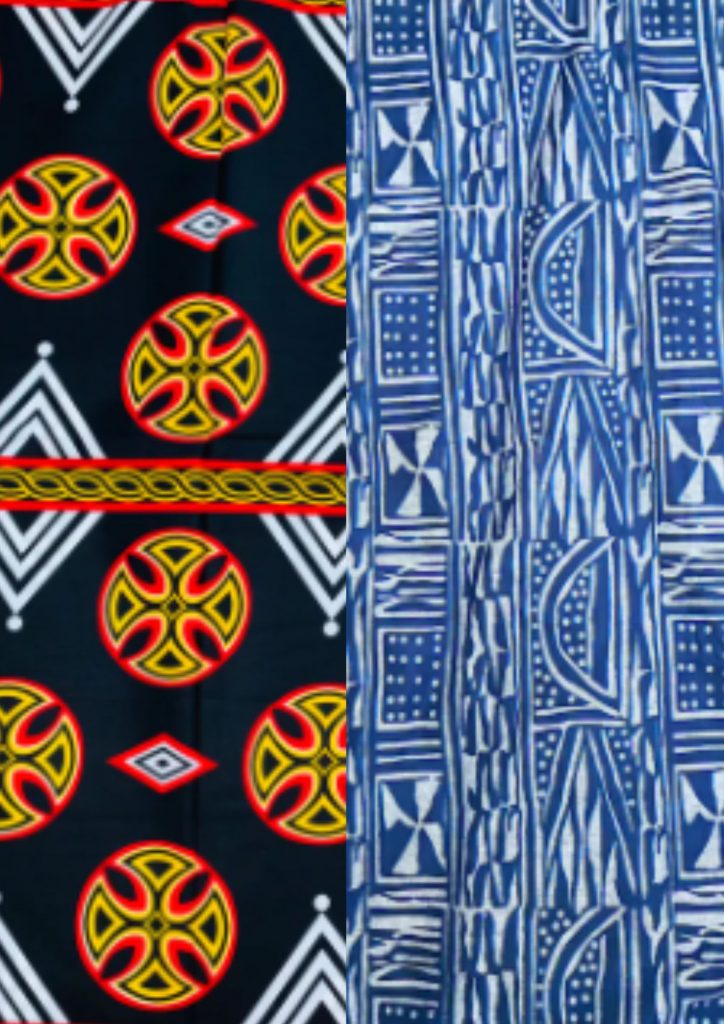
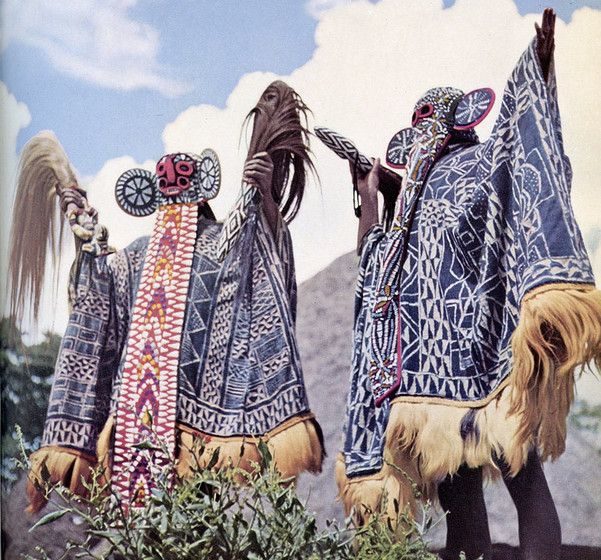
Cameroon carries a remarkable textile heritage, and two fabrics stand out with singular strength: Ndop and Toghu. Both originate from the Grassfields kingdoms, yet each tells a different story.Together, they form a cultural bridge between royalty, spirituality, and contemporary identity. The ndop fabric, geometry, indigo, and ancestral wisdom Ndop fabric holds a sacred place in Bamileke culture. Artisans weave cotton by hand, stitch raffia motifs with precision, and immerse the fabric in natural indigo baths. As the stitches come off, patterns appear with clarity and intention. The process feels almost ritualistic, because each gesture echoes generations of knowledge. Moreover, Ndop motifs never arise by chance. They reflect a symbolic system deeply rooted in memory: Thus, ndop does more than decorate a space, it transmits a worldview shaped by balance, community, and spirituality. Today, ndop naturally integrates into contemporary interiors. Its indigo depth, geometric strength, and spiritual dimension offer a quiet, soulful presence wherever it hangs or rests. The Toghu fabric, royal elegance and vibrant storytelling While Ndop speaks with indigo and geometry, Toghu expresses itself through movement and color.Born among the Bamenda Grassfields kingdoms, Toghu once dressed kings, queens, and dignitaries during ceremonies and festivals. Artisans trace the motifs by hand, then embroider them with vivid threads, creating a fabric that almost breathes through its patterns. Toghu motifs celebrate royalty, bravery, fertility, community, and ancestry. Every line follows the rhythm of the artisan’s hand; every color reinforces the narrative. Unlike mass-produced textiles, Toghu carries identity as a living energy. In addition, Toghu continues to evolve. Designers, dancers, and cultural ambassadors now reinterpret it in fashion, performance, and art installations. Thus, a fabric once reserved for elite ceremonies now becomes a global ambassador of Cameroon’s creative spirit. Two fabrics, one cultural heartbeat Although Ndop and Toghu differ in technique and appearance, they share a common soul.They both anchor communities in their origins, while offering new forms of expression to future generations. Together, they reveal the complexity and richness of Cameroon’s artistic identity. A legacy that continues through the hands that create it In the villages where these fabrics originate, artisans carry stories that predate modern borders. They spin cotton, dye indigo, embroider symbols, and share their time with a patience that defies haste. Their work reminds us that beauty arises from intention and discipline. Therefore, supporting these artisans means more than acquiring a textile. It means sustaining a lineage, strengthening communities, and allowing ancient techniques to remain alive and dignified. At Karioska, we honor this heritage by collaborating directly with artisans in Cameroon. This connection ensures authenticity, fair compensation, and cultural continuity, from the moment the fabric is created to the moment it enters your home. Ndop and Toghu, fabrics that speak They do not follow trends.They do not chase attention.Instead, they whisper the stories of a people, a land, and a time that continues to flow through the hands that shape them. Ndop offers depth. Toghu offers radiance. Both offer meaning, a quiet luxury, woven with intention.

African craft

Everything to know about the Bamileke Ndop fabric

Among Cameroon’s most emblematic artistic expressions, the Ndop fabric stands apart as a symbol of identity, heritage, and spiritual meaning.More than a textile, Ndop is a visual language, a fabric where stories, symbols, and ancestral memory are woven into indigo and cotton.It is a creation that speaks quietly, through geometry, rhythm, and intention. A fabric rooted in ritual and royalty For centuries, Ndop fabric has been used in royal ceremonies, spiritual rites, and significant cultural events within Bamileke society. Reserved for kings, nobles, and people of elevated status, it represented wisdom, leadership, and connection to the spiritual world. Traditionally, Ndop is made from handwoven cotton and dyed with deep indigo extracted from natural pigments. The process follows ancestral resist-dyeing techniques, where raffia stitches are placed onto the cotton before dyeing.Once removed, these stitches reveal geometric patterns, each one carrying cultural significance. Ndop is not decorative by chance. Every motif is chosen with intention. The symbolism of indigo In Bamileke cosmology, indigo is more than a color, it is a symbol of protection, vitality, and continuity. It has the meaning of purity, virtue, and spiritual clarity.That is why Ndop fabric is present during rites of passage, births, blessings, funerals, and transitions. To wear or display Ndop is to hold a shield of meaning, a piece believed to harmonize and elevate the space it inhabits. Motifs that speak Ndop designs form a coded visual vocabulary.Each motif represents a concept linked to nature, spirituality, or community values: A piece of Ndop fabric is never random.It is a map of symbols, a spiritual architecture expressed in cotton and dye. An ancestral technique preserved by hand Creating Ndop fabric is a meticulous process passed down through generations.It requires time, discipline, and a meditative understanding of the material. The steps remain entirely manual: This slow ritual connects the artisan to their lineage, a dialogue woven through time. At Karioska, we collaborate with artisans who practice this tradition with respect and mastery, ensuring that each Ndop fabric carries authentic origin and cultural integrity. A contemporary presence Though rooted in ancient customs, Ndop fabric naturally finds its place in modern interiors.Its depth, geometry, and symbolic resonance complement contemporary aesthetics beautifully. Whether used as: Ndop brings soul, narrative, and cultural depth to every space. It is not a trend.It is heritage made visible. Voir cette publication sur Instagram Une publication partagée par Dominique Breton (@dominique.breton.777) A living legacy Every Ndop fabric carries the imprint of those who created it, their time, their gestures, their understanding of the world.When you welcome Ndop into your home, you do not only acquire a textile. You receive a fragment of cultural memory, shaped by the hands and stories of the Bamileke people. Through Karioska’s direct collaboration with Cameroon’s artisans, each purchase contributes to the continuation of this sacred art form, ensuring that it endures with dignity and pride. Ndop, a fabric of meaning It is identity, a ritual, protection, art.It is a reminder that beauty can be both silent and profound, a quiet luxury woven from earth, indigo, gesture, and time.
african juju hat mandala wall decor interior design artisanat symmetry juju hatt mandala väggdekoration decorazione murale decoración mural ديكور جداري 非洲曼陀罗墙面装饰 日本マンダラ壁飾り
Uncategorized

.Each order empowers women artisans and sustains ancestral craftsmanship

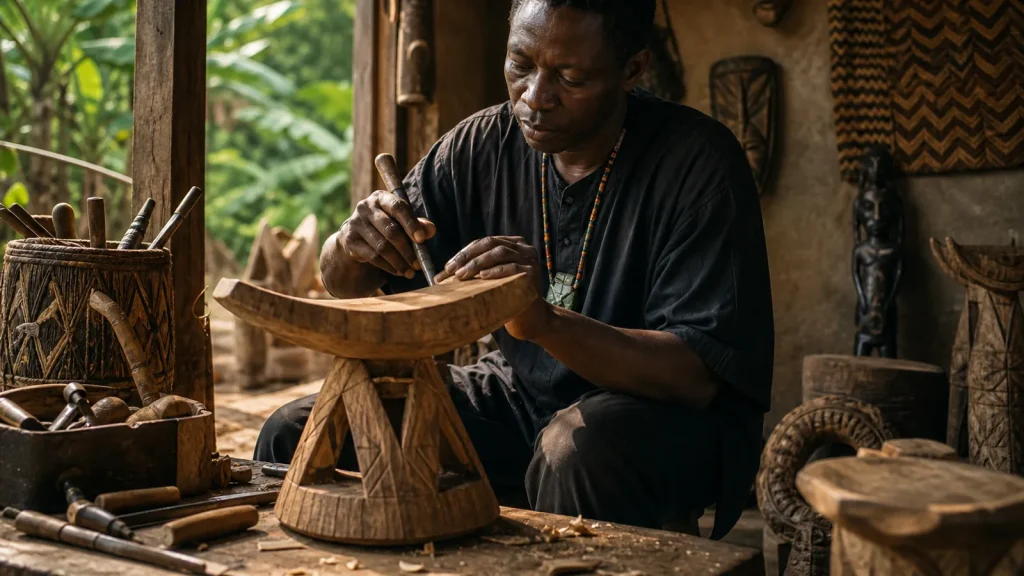
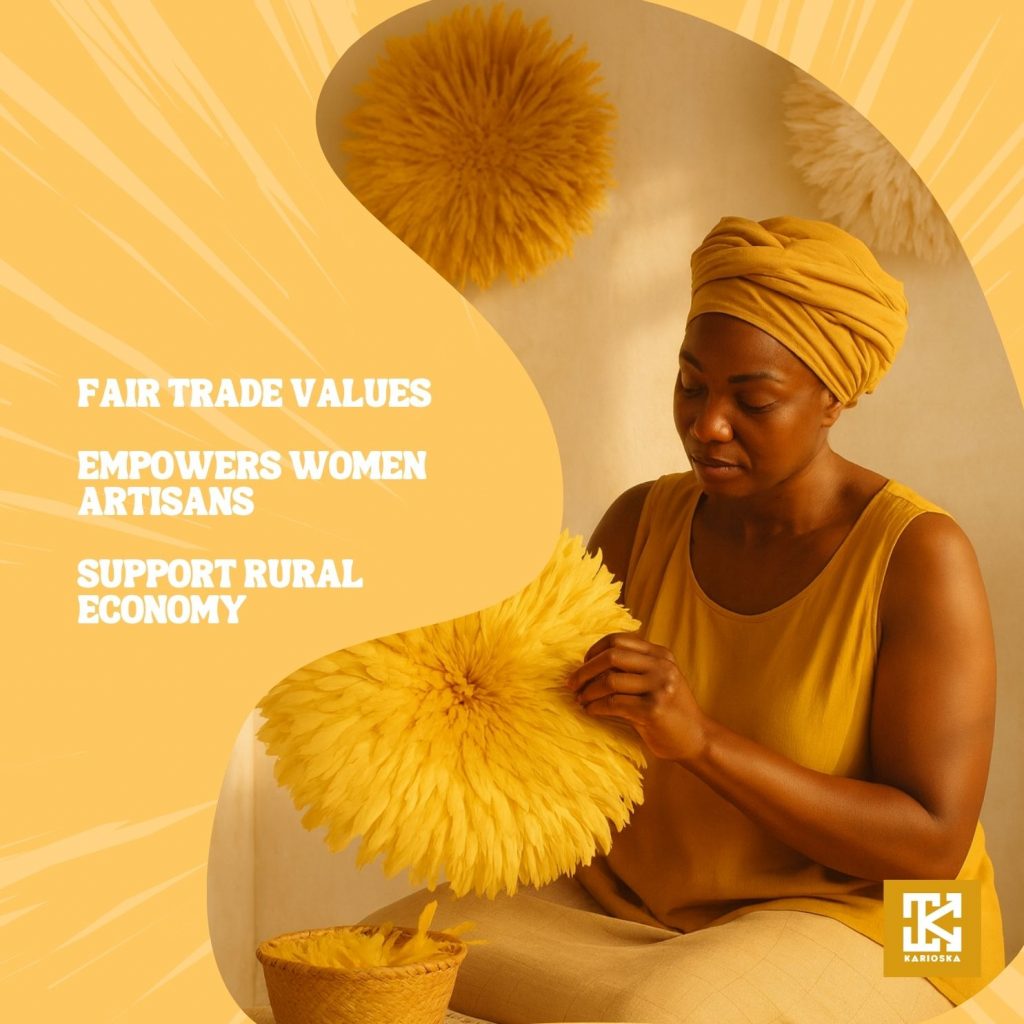
In the quiet rhythm of creation, a story begins long before an object reaches a home. In Cameroon, under the shade of workshops shaped by time, women artisans carve, weave, bead, and sculpt with gestures inherited from generations of mothers, aunts, and grandmothers.Their hands are the keepers of an ancient knowledge, a language of patience, texture, and spirit. At Karioska, each order is more than a purchase. It is an act of recognition. A way of saying yes to the strength, dignity, and independence of the women who keep this heritage alive. 1. Empowering women, one gesture at a time For many of our artisans, craftsmanship is not simply a livelihood, it is a path toward autonomy.When you choose a Karioska creation, you support: Empowerment is not a slogan here. It is what happens when a woman’s work is valued at the right price, when her talent becomes a bridge to choice, freedom, and possibility. Shipping from Cameroon, a choice that gives back Shipping directly from Cameroon is not a constraint, It is a commitment. This choice ensures that: It creates a powerful dynamic: when artisans see their work leave Cameroon with pride, they believe in their craft even more, and the craft continues to live. A circle of meaningful impact When an order is placed, a chain of lives is touched: A woman artisan earns fairly.Her family gains stability.A community grows stronger.A tradition survives.A conscious buyer receives an object that carries soul, depth, and intention. Nothing is mass-produced.Nothing is anonymous.Everything is connected. 2. Preserving the soul of ancestral craftsmanship Behind every juju hat, every Bamileke stool, every beaded piece, lies a gesture that has survived centuries.These skills are fragile treasures, threatened by industrialization, displacement, and the erosion of traditional livelihoods. Your order sustains: Craftsmanship is not a trend.It is memory made visible. 3. The beauty of a conscious choice In a world of fast consumption, choosing a handcrafted piece is an act of resistance, a return to slowness, to truth, to the beauty of imperfection and the purity of intention. Each Karioska piece whispers:“I was made by a hand that knows.”“I carry a story that deserves to be heard.” And each order answers:“I see you. I value you. Continue.”

Scroll to Top